
When it comes to tin packaging, most brands focus on design, artwork, or size selection. However, very few pay attention to the hidden quality issues that often appear in low-end tin box factories. These defects do not only affect the appearance of your packaging — they directly impact your brand image, customer satisfaction, and even your product safety.
If you are sourcing tin boxes for food, tea, cosmetics, coffee, gifts, or promotional items, understanding these defects will help you avoid costly mistakes and select a reliable manufacturer from the beginning.
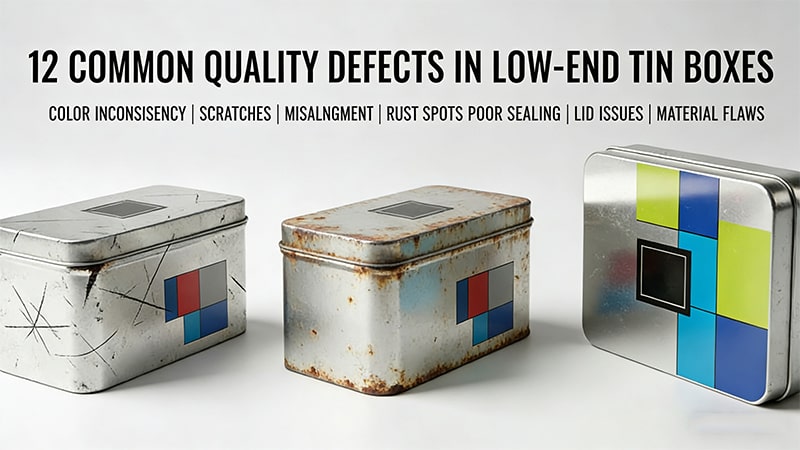
Below are the 12 most common quality defects found in inexpensive or poorly managed tin box suppliers — and how they affect your business.
Printing color mismatch is one of the most common problems in tin packaging.Inferior factories use unstable CMYK parameters, cheap inks, or poorly calibrated printing machines, resulting in each batch having slightly different tones.
Why it matters:Brand colors become inconsistent, leading to complaints from distributors and retailers. For premium products like tea, cosmetics, and gifts, this is unacceptable.
Scratches mainly occur due to:
Impact on your brand:Even a small scratch can make the product unsellable in retail markets. For gift boxes, scratches = immediate rejection.
Misalignment appears when the printed sheet is not accurately positioned during stamping.
Common issues include:
Industries affected: round tins, deep tins, and continuous-pattern tins.
This is a result of worn-out molds or poor trimming.
Sharp edges can easily cause injuries to consumers — especially children — and become a serious safety issue.
Retailers will instantly reject these products.
Either the lid is too loose, or it becomes extremely tight and difficult to open.Root causes include inaccurate tooling, poor stamping precision, or thin material.
Consequences:
Low-end suppliers often cut costs by using thinner or lower-grade tinplate.These tins deform easily under pressure or during transportation.
Resulting in:
Usually caused by:
Once a tin is dented, it cannot be restored — it's a complete loss.
Moisture inside the workshop, unclean equipment, or improper drying of coatings leads to visible rust spots, fingerprints, or oil stains.This is especially unacceptable for food, cosmetics, or tea tin packaging.
Bad odor often comes from:
For food-grade tins, even a slight smell is enough to fail compliance testing.
Hinged tins are common in gift sets, coffee tins, stationery boxes, and promotional packaging.Low-end manufacturers often hand-assemble hinges without strict alignment checks.
This causes:
This directly lowers perceived value.
A poorly maintained workshop allows dust, fibers, or small metal shavings to fall inside the tin during packing.
This leads to:
Even a 1–2 mm deviation can make the product unusable for:
This is often caused by inaccurate molds or lack of calibration.
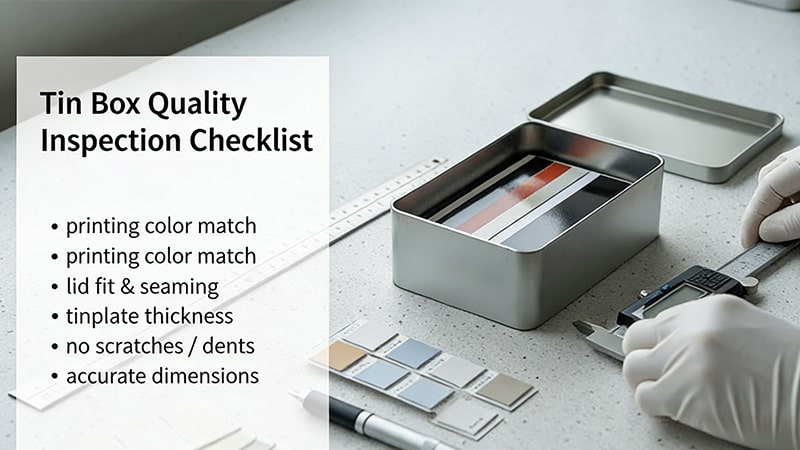
To reduce risks, consider the following when evaluating a tin box manufacturer:
Modern equipment ensures consistent printing and accurate dimensions.
Ask whether they conduct:
Low-end material = high risk of dents and deformation.
This allows you to detect color, fit, and finishing problems early.
This prevents artwork misalignment or design misunderstanding.
A quick checklist for your purchasing team:
This checklist can significantly reduce rework and rejection rates.
Tin packaging plays a major role in how consumers perceive your product. While low-cost manufacturers may appear attractive at first glance, the hidden quality issues can create serious long-term damage to your brand.
Understanding these defects — and knowing how to evaluate a supplier — helps you protect your product, your customers, and your reputation.
Obtenha as últimas informações e ofertas especiais


 Rede IPv6 suportada
 Português
 English
 Français
 Deutsch
 Español